 MIIS 2026
International Workshop On Mathematical Issues In Information Sciences
数据科学国际研讨会
18th-20th December, 2026
MIIS 2026
International Workshop On Mathematical Issues In Information Sciences
数据科学国际研讨会
Speakers are listed in alphabetical order.
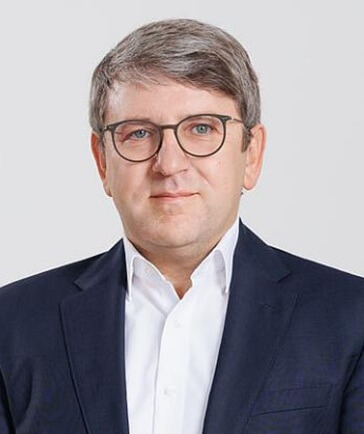
University of Vienna
Radu Ioan Boţ is a Full Professor of Applied Mathematics with Emphasis on Optimization at the Faculty of Mathematics, University of Vienna, where he serves as Dean of the Faculty of Mathematics and Head of the Institute of Mathematics, and is the Speaker of the Vienna Graduate School on Computational Optimization (VGSCO). He received his Diploma and M.Sc. in Mathematics from Babeș-Bolyai University in Cluj-Napoca, Romania, in 1998 and 1999, respectively, and his Ph.D. in Mathematics from Chemnitz University of Technology, Germany, in 2003, followed by his Habilitation in 2008. His research focuses on nonsmooth convex and nonconvex optimization, numerical algorithms for optimization and minimax problems, monotone operator theory, discrete versus continuous time approaches, and optimization methods for data science. He is a (co-)author of the books Duality in Vector Optimization and Conjugate Duality in Convex Optimization, both published by Springer, and has served as Editor-in-Chief of the SIAM Journal on Optimization since January 1, 2026.

Cornell University
Nikita Doikov is an Assistant Professor in the School of Operations Research and Information Engineering (ORIE) at Cornell University. He received his Ph.D. from UCLouvain, Belgium, in 2021, under the supervision of Prof. Yurii Nesterov, after earning his M.S. in Applied Mathematics and Informatics from the Higher School of Economics and his B.S. in Applied Mathematics and Computer Science from Lomonosov Moscow State University. He subsequently conducted postdoctoral research at EPFL, Switzerland, in the Machine Learning and Optimization Laboratory led by Martin Jaggi, and gained industry experience as an intern at Google. His research focuses on optimization algorithms and their applications in machine learning and AI, with a particular emphasis on designing provably efficient methods that exploit problem structure—such as second-order information, model landscapes, and stochasticity—to accelerate model training at scale. His work spans convex and non-convex optimization, complexity bounds, and scalable decentralized optimization. Representative contributions include the “Super-Universal Regularized Newton Method” (with Y. Nesterov, SIAM Journal on Optimization) and studies on the local convergence of tensor methods (Mathematical Programming).
UCLouvain (Louvain-la-Neuve, Belgium)
Geovani Nunes Grapiglia is a Professor in the Department of Applied Mathematics at UCLouvain (Louvain-la-Neuve, Belgium), affiliated with the ICTEAM/INMA Institute. He obtained his Ph.D. in Mathematics from the Universidade Federal do Paraná (UFPR, Brazil) in 2014, where he served as Assistant and Associate Professor from 2015 to 2021 before joining UCLouvain in 2021. Since 2022 he has held the chair previously occupied by Prof. Yurii Nesterov at UCLouvain. His research focuses on the development, analysis, and application of optimization methods, with recent work spanning derivative-free methods for nonconvex optimization and accelerated high-order methods for convex optimization. Representative contributions include "Adaptive Third-Order Methods for Composite Convex Optimization" (with Y. Nesterov, SIAM Journal on Optimization, 2023) and first- and zeroth-order implementations of the regularized Newton method with lazy approximated Hessians (Journal of Scientific Computing, 2025).
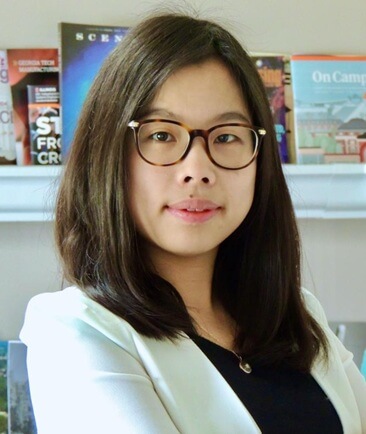
ETH Zürich
Niao He is an Associate Professor in the Department of Computer Science at ETH Zürich, where she leads the Optimization and Decision Intelligence (ODI) Group. She received her Ph.D. in Operations Research from Georgia Institute of Technology in 2015, served as an Assistant Professor at the University of Illinois at Urbana-Champaign from 2016 to 2020, and joined ETH Zürich in 2020. Her research lies at the interface of operations research and machine learning, with a primary focus on the algorithmic and theoretical foundations of large-scale optimization, optimization under uncertainty, reinforcement learning, and probabilistic inference, aiming to develop provably efficient, reliable, and intelligent optimization methods for data-driven decision-making. She is a recipient of the AISTATS Best Paper Award, the NSF CISE Research Initiation Initiative (CRII) Award, the NCSA Faculty Fellowship, and the Beckman CAS Fellowship, and has served as an area chair for NeurIPS 2020, ICLR 2021, UAI 2021, and ICML 2021.
Georgia Institute of Technology
George Lan is an A. Russell Chandler III Chair and Professor of Industrial and Systems Engineering at Georgia Institute of Technology. His research and teaching interests lie in theory, algorithms and applications of stochastic optimization and nonlinear programming. Most of his current research concerns the design of efficient algorithms for solving challenging optimization problems, especially those arising from data analytics, machine learning, and reinforcement learning. He actively pursues the applications of these methodologies in healthcare and sustainability areas. Dr. Lan serves as the associate editor for Computational Optimization and Applications (2014 – present), Mathematical Programming (2016 – present), SIAM Journal on Optimization (2016 – present), and Operations Research (2023 – present). Dr. Lan is an associate director for the center of machine learning at Georgia Tech.
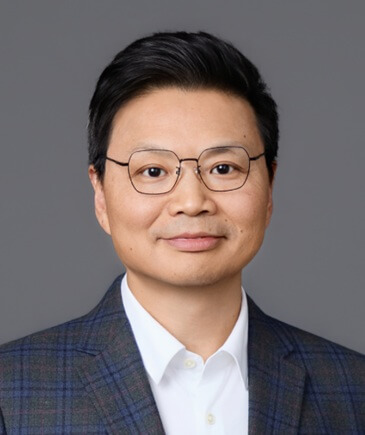
Peking University
Weinan E is a Member of the Chinese Academy of Sciences, Professor at the School of Mathematical Sciences, Peking University, Director of the Center for Machine Learning Research at Peking University, and Founding President of the Beijing Academy of Artificial Intelligence for Science. He is a Fellow of the American Mathematical Society, the Society for Industrial and Applied Mathematics, and the Institute of Physics. He received his B.S. from the University of Science and Technology of China in 1982, his M.S. from the Chinese Academy of Sciences in 1985, and his Ph.D. from the University of California, Los Angeles, in 1989. He was a Professor at Princeton University from 1999 until his transfer to emeritus status in 2022. His research spans computational mathematics, applied mathematics, machine learning, and their applications in mechanics, physics, chemistry, and materials science. He was the first to propose and systematically advance the concept of "AI for Science," promoting its development across chemistry, materials science, biology, fluid dynamics, and other fields, and is a pioneer in combining machine learning with applied mathematics. He served as a 1-hour speaker at the 2022 International Congress of Mathematicians and an invited speaker at the 2022 International Conference on Machine Learning. His honors include the Presidential Early Career Award for Scientists and Engineers, the ICIAM Collatz Prize, the SIAM Theodore von Kármán Prize, the Peter Henrici Prize, the ACM Gordon Bell Prize, the ICIAM Maxwell Prize, the Su Buqing Applied Mathematics Award, the inaugural ICCM Lin Chia-Chiao Award, and the 2025 Ho Leung Ho Lee Foundation Science and Technology Progress Award.
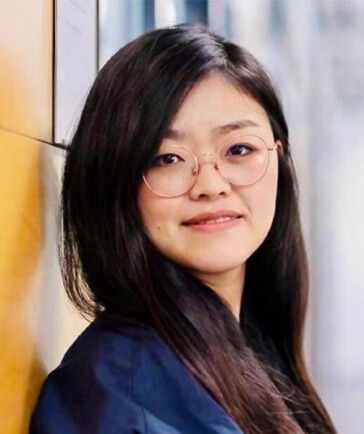
ETH Zürich
Siyu Tang is an Associate Professor in the Department of Computer Science at ETH Zürich, Head of the Institute for Visual Computing, and leads the Computer Vision and Learning Group (VLG). She is also a Core Faculty Member of the ETH AI Center. She received her B.S. in Computer Science and Technology from Zhejiang University in 2011, her M.S. in Media Informatics from RWTH Aachen University, and her Ph.D. in Computer Science from the Max Planck Institute for Informatics in 2017, advised by Prof. Bernt Schiele. She subsequently conducted postdoctoral research at the Max Planck Institute for Intelligent Systems under Dr. Michael Black, and received an early career research grant in 2017 to establish her own research group at the same institute. Before joining ETH Zürich in January 2020, she led the Holistic Vision Group at MPI-IS. Her research focuses on the intersection of computer vision and machine learning, with an emphasis on perceiving and modeling humans, including human motion estimation, digital human creation and synthesis, human reconstruction and motion synthesis in 3D scenes, egocentric computer vision, and generative models for content creation. She has authored over 60 publications in top venues such as CVPR, ECCV, and ICCV, with representative works including Mask3D, 3DGS-Avatar, DeepCut, and Lifted Multicut. Her honors include the ELLIS Ph.D. Award, the DAGM MVTec Dissertation Award, the Best Paper Award at BMVC 2012, the Best Paper Award at 3DV 2020, and multiple Best Paper Award candidates at CVPR 2021 and 2022. She served as an Area Chair for CVPR 2020 and has been actively involved in program committees of major international conferences.
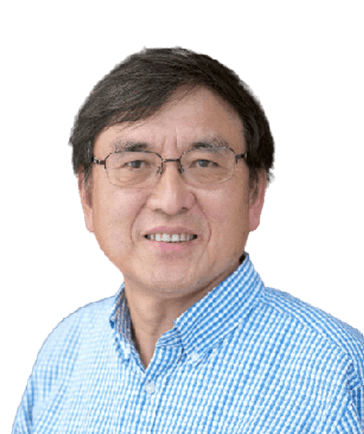
The Chinese University of Hong Kong, Shenzhen
Shenzhen Loop Area Institute
Xu Jinchao is an expert in the field of computational mathematics, a Fellow of the European Academy of Sciences, a Fellow of the Academia Europaea, a Professor at King Abdullah University of Science and Technology (KAUST) in Saudi Arabia, the Verne M. Willaman Endowed Professor in the Department of Mathematics at Pennsylvania State University, and Director of the Center for Computational Mathematics and Applications at Pennsylvania State University.
Xu Jinchao graduated from Xiangtan University with a bachelor's degree in computational mathematics in 1982; received his master's degree from Peking University in 1984; and obtained his Ph.D. from Cornell University in 1989. From January 1989 to June 1991, he served as an Assistant Professor at Pennsylvania State University; from July 1991 to June 1995, as an Associate Professor at Pennsylvania State University; in July 1995, he was promoted to Full Professor at Pennsylvania State University; in 1997, he became Director of the Center for Computational Mathematics and Applications at Pennsylvania State University and Director of the Institute of Computational and Applied Mathematics at Xiangtan University; in 2006, he received funding from the National Science Fund for Distinguished Young Scholars (Category B); from July 2007 to April 2010, he served as a Distinguished Professor at Pennsylvania State University; from April 2010 to December 2014, as the Francis R. and Helen M. Pentz Professor of Science at Pennsylvania State University; since January 2015, he has held the Verne M. Willaman Endowed Professorship in the Department of Mathematics at Pennsylvania State University; in 2022, he was elected a Fellow of the European Academy of Sciences and, in May of that year, became Professor of Applied Mathematics and Computational Science at King Abdullah University of Science and Technology (KAUST); in 2023, he was elected a Fellow of the Academia Europaea.
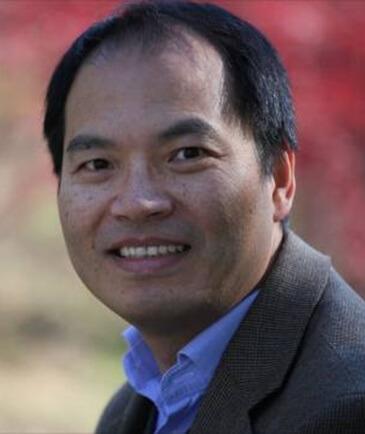
Tencent
Zhengyou Zhang is a Distinguished Scientist and the Chief Scientist at Tencent, where he has served as the Director of both Tencent AI Lab and Tencent Robotics X since March 2018. He is an ACM Fellow and an IEEE Fellow, and a world-renowned expert in computer vision, multimedia technology, and robotics, with pioneering contributions to stereo vision, motion analysis, camera calibration, robot navigation, and immersive telepresence. He received his B.S. in electronic engineering from Zhejiang University in 1985, his M.S. in computer science from the University of Nancy in 1987, and his Ph.D. in computer science in 1990 and the Doctorate of Science (Habilitation à diriger des recherches) in 1994 from the University of Paris XI. Before joining Tencent, he was a Partner Research Manager at Microsoft Research for 20 years, and prior to that a Senior Research Scientist at INRIA for over 10 years. His invention of the flexible camera calibration technique, now universally known as "Zhang's method," was honored with the IEEE Helmholtz Test of Time Award at ICCV 2013. In 2025, he received the AISTATS Test of Time Award for his work on Deeply-Supervised Nets. He has published over 300 papers in top international conferences and journals, with more than 78,000 citations and an h-index of 108. In the 2024 Stanford University "World's Top 2% Scientists" list, he ranked 998th in career-long scientific impact and 651st in annual scientific impact, and 34th worldwide in the field of AI and image processing. In January 2021, he became Tencent's first 17th-level Distinguished Scientist, the highest professional rank in the company's history.
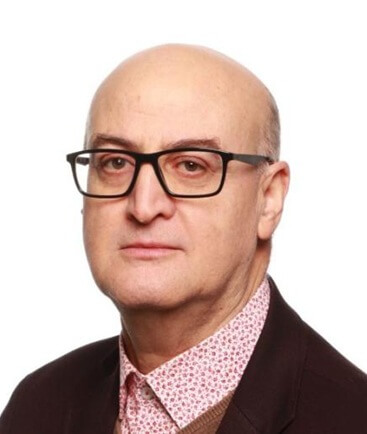
Tampere University
Moncef Gabbouj is a Professor of Information Technology at the Department of Computing Sciences, Tampere University, Finland, and a Fellow of the IEEE, the Academia Europaea, and the Finnish Academy of Science and Letters. He received his B.S. in Electrical Engineering from Oklahoma State University in 1985, and his M.S. and Ph.D. in Electrical Engineering from Purdue University in 1986 and 1989, respectively. He served as an Academy of Finland Professor from 2011 to 2015 and has held visiting professorships at institutions including the Hong Kong University of Science and Technology, the University of Southern California, and Purdue University. His research interests include big data analytics, multimedia content-based analysis, artificial intelligence, machine learning, pattern recognition, nonlinear signal and image processing, voice conversion, and video processing and coding. He has co-authored over 550 publications and served as General Co-Chair of major IEEE conferences including ICIP 2020, ICIP 2024, ISCAS 2019, and ICME 2021. His honors include the Knight, First Class, of the Order of the White Rose of Finland (2006) and the Nokia Foundation Recognition Award (2005).

University of California, Irvine
A.Lee Swindlehurst is a Distinguished Professor and the Nicolaos G. and Sue Curtis Alexopoulos Presidential Chair in the Department of Electrical Engineering and Computer Science at the University of California, Irvine, where he also serves as Department Chair. He received his B.S. (summa cum laude) and M.S. degrees in Electrical Engineering from Brigham Young University in 1985 and 1986, respectively, and his Ph.D. in Electrical Engineering from Stanford University in 1991. He joined UC Irvine in 2007 after serving on the faculty at BYU (including as Department Chair) and as Vice President of Research at ArrayComm LLC. His research focuses on array signal processing for radar, wireless communications, and biomedical applications. He is an IEEE Fellow and Life Fellow, and was elected a Foreign Member of the Royal Swedish Academy of Engineering Sciences (IVA) in 2016. His honors include the 2022 IEEE Signal Processing Society Claude Shannon-Harry Nyquist Technical Achievement Award, the 2024 IEEE Communications Society Fred W. Ellersick Prize, and multiple IEEE Best Paper Awards.
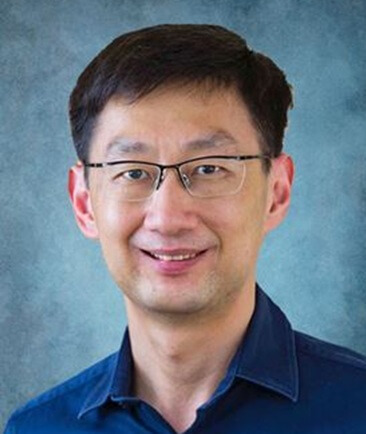
The Hong Kong Polytechnic University
Kay Chen Tan is the Founding Head and Chair Professor of Computational Intelligence in the Department of Data Science and Artificial Intelligence at The Hong Kong Polytechnic University. He received his BEng (First Class Honours) and PhD from the University of Glasgow, and is an IEEE Fellow and a Senior Research Fellow of the Hong Kong Research Grants Council (RGC). His research focuses on artificial intelligence, evolutionary computation, and machine learning, with foundational contributions to adaptive evolutionary search, decision-making under uncertainty, and evolutionary operational research; more recently, he has advanced the integration of evolutionary computation with large language models and neuromorphic computing. He has co-authored eight books and published over 300 peer-reviewed journal articles, with total citations exceeding 36,000 and an h-index of 94. He served as Editor-in-Chief of IEEE Transactions on Evolutionary Computation (2015–2020) and IEEE Computational Intelligence Magazine (2010–2013), and currently serves as Vice-President for Publications of the IEEE Computational Intelligence Society (2021–2024). His honors include the IEEE CIS Evolutionary Computation Pioneer Award (2026).
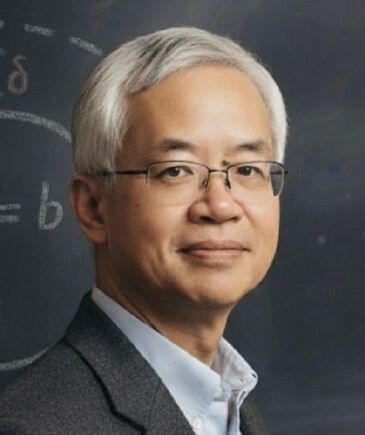
Columbia University
Qiang Du is the Fu Foundation Professor of Applied Mathematics at Columbia University, where he leads the Computational Mathematics and Multiscale Modeling (CM3) group and serves as co-chair of the Center for Computing Systems for Data-Driven Science. He received his B.S. in Mathematics from the University of Science and Technology of China in 1983 and his Ph.D. in Mathematics from Carnegie Mellon University in 1988. He subsequently held positions at the University of Chicago as a Dickson Instructor, Michigan State University, Iowa State University, the Hong Kong University of Science and Technology, and Pennsylvania State University, before joining Columbia in 2014. His research focuses on mathematical modeling, analysis, and scientific computing, with emphasis on numerical solutions of partial differential equations, nonlocal modeling and asymptotically compatible schemes, phase-field simulations, and multiscale methods, with applications in physical, biological, materials, data, and information sciences, as well as machine learning. He is a Fellow of SIAM, AMS, and AAAS, and his honors include the Feng Kang Prize in Scientific Computing, the SIAM Outstanding Paper Prize, an ACM Gordon Bell Prize finalist selection, the USACM Thomas J.R. Hughes Medal, and the ICBS Frontiers of Science Award. He was an invited speaker at the 2018 International Congress of Mathematicians. He currently serves as Editor-in-Chief of the SIAM Journal on Applied Mathematics and as a founding Co-Editor-in-Chief of Communications of the American Mathematical Society.
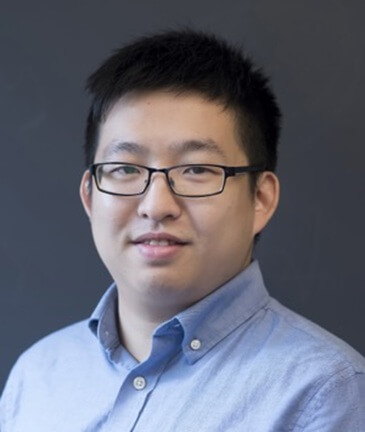
Center for Computational Mathematics, Flatiron Institute
Jiequn Han is a Research Scientist at the Center for Computational Mathematics, Flatiron Institute, Simons Foundation. He previously served as an Instructor of Mathematics at Princeton University. He received his Ph.D. in Applied Mathematics from the Program in Applied and Computational Mathematics (PACM) at Princeton University in 2018, advised by Prof. Weinan E, and his bachelor's degree from the School of Mathematical Sciences at Peking University in 2013. His research focuses on machine learning for science, with an emphasis on deep learning-based methods for solving high-dimensional partial differential equations, stochastic control and mean-field games, molecular dynamics, and generative modeling, aiming to develop more accurate, reliable, and scalable scientific computing methods. He is the recipient of the 2025 SIAM Activity Group on Computational Science and Engineering (SIAG/CSE) Early Career Prize, awarded biennially to a single scholar.
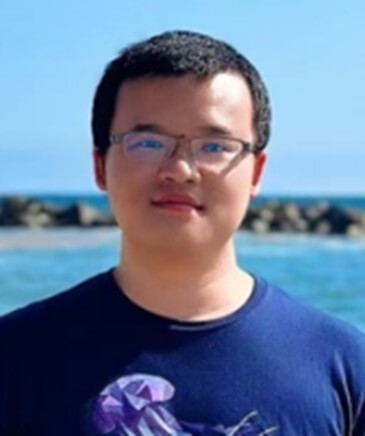
Zhejiang University
Lei Lan is a Hundred Talents Program Researcher and Ph.D. supervisor at the State Key Laboratory of Computer Aided Design and Computer Graphics, Zhejiang University. He received his Ph.D. from Xiamen University and subsequently conducted postdoctoral research at Clemson University and the University of Utah. His research interests include physics-based simulation, geometric modeling, GPU parallel computing, computer animation, and collision detection. He has published over twenty papers in top-tier international journals and conferences such as ACM Transactions on Graphics (TOG), SIGGRAPH, SIGGRAPH Asia, and AAAI. In recent years, his work has focused on large-scale deformable body simulation, high-precision contact modeling, and parallel simulation training for robotics. He has undertaken projects funded by the National Natural Science Foundation of China and the Ministry of Science and Technology, and is supported by the National Young Talent Program.
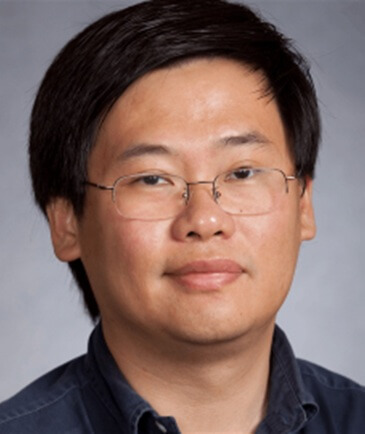
University of California, San Diego
Melvin Leok is a Professor of Mathematics at the University of California, San Diego, where he also serves as Director of the Computational Science, Mathematics and Engineering (CSME) graduate program. He received his Ph.D. in Control and Dynamical Systems from the California Institute of Technology in 2004 under the direction of Jerrold Marsden, and previously held positions at the University of Michigan and Purdue University before joining UCSD in 2009. His research focuses on computational geometric mechanics, computational geometric control theory, geometric numerical integration, discrete differential geometry, and structure-preserving numerical schemes, using a synthesis of differential geometric and numerical analysis techniques to provide long-time stable and robust solutions to differential equations, thereby enabling methods for modeling and controlling modern engineering systems. His honors include the DoD Newton Award for Transformative Ideas (2020), the Simons Fellowship in Mathematics (2022), the National Academy of Sciences Kavli Frontiers of Science Fellowship, the NSF CAREER Award, the SciCADE New Talent Prize, the SIAM Student Paper Prize, and the Leslie Fox Prize in Numerical Analysis (second prize). He has delivered plenary talks at Foundations of Computational Mathematics, NUMDIFF, and other major international conferences, and serves on the editorial boards of the Journal of Nonlinear Science, the SIAM Journal on Control and Optimization, and other journals.
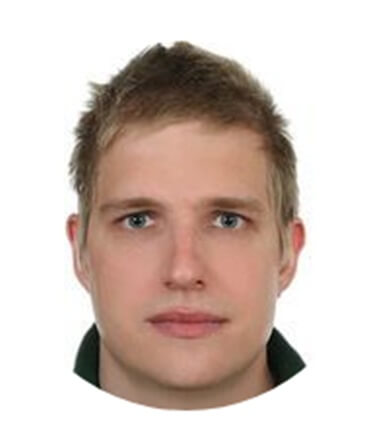
HSE University
Alexey Naumov is the Director of the AI and Digital Science Institute at the Faculty of Computer Science, HSE University, Moscow, where he also serves as a Professor and Department Head at the Big Data and Information Retrieval School (a joint department with the Kharkevich Institute for Information Transmission Problems, RAS), and as Academic Supervisor of the International Laboratory of Stochastic Algorithms and High-Dimensional Inference. He graduated from Lomonosov Moscow State University in 2010, received his Ph.D. in Mathematics from Bielefeld University in 2013, and earned a Candidate of Sciences degree in Mathematics and Physics from MSU the same year, followed by a Doctor of Sciences degree from HSE University in 2022. His research focuses on high-dimensional probability and the mathematics of data science, spanning random matrix theory, high-dimensional statistical inference, reinforcement learning, stochastic approximation, and generative flow networks. He has authored over 40 papers in leading journals and conferences. Representative publications include “Large ball probability, Gaussian comparison and anti-concentration” (with F. Götze, V. Spokoiny, and V. Ulyanov, Bernoulli, 2019) and “Bootstrap confidence sets for spectral projectors of sample covariance” (Probability Theory and Related Fields, 2019). He has received HSE Best Teacher recognition (2018–2019, 2022) and the Best Academic Supervisor Award (2023–2024), and serves on the editorial board of Statistics and Computing.
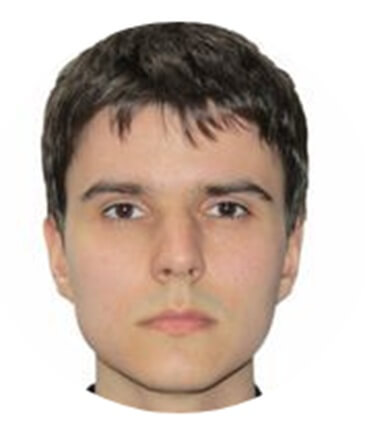
HSE University
Sergey Samsonov is an Associate Professor at the Faculty of Computer Science, HSE University, Moscow, where he also serves as Head of the International Laboratory of Stochastic Algorithms and High-Dimensional Inference at the AI and Digital Science Institute and a Lecturer at the Centre for Training Top AI Professionals. He received his B.S. in Applied Mathematics and Information Science from Lomonosov Moscow State University in 2017 and his Candidate of Sciences degree (equivalent to a Ph.D.) from HSE University in 2024, with a dissertation on concentration inequalities for functionals of Markov processes. His research interests include high-dimensional probability and statistics, Markov Chain Monte Carlo methods, the concentration of measure phenomenon, stochastic approximation, sampling methods, and generative modeling, with a recent focus on diffusion sampling, generative flow networks (GFlowNets), and the intersection of sampling with reinforcement learning. His honors include the Yandex ML Prize (2022), the "AI Leaders" Award (2024), and HSE Best Teacher recognition (2020, 2022, 2024–2025).
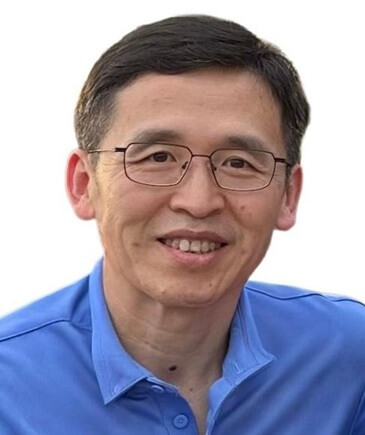
Fundamental AI Research (FAIR), Meta Platforms, Inc.
Lin Xiao is a Research Scientist at Meta's Fundamental AI Research (FAIR) lab in Seattle. He received his Bachelor of Engineering from Beijing University of Aeronautics and Astronautics (now Beihang University) and his Ph.D. from Stanford University in 2004, followed by a postdoctoral fellowship at the California Institute of Technology's Center for the Mathematics of Information. Before joining Meta (then Facebook) in 2020, he spent 14 years as a Researcher at Microsoft Research. His research interests include theory and algorithms for large-scale optimization and machine learning, deep learning, reinforcement learning, and parallel and distributed computing. He was a winner of the Young Researcher Competition at the first ICCOPT (2004) for his work on fastest mixing Markov chains, received the Test-of-Time Award at NeurIPS 2019 for his regularized dual averaging method, and the Test-of-Time Award at ACM SenSys 2025 for his work on distributed sensor fusion using average consensus. He currently serves as an associate editor for the SIAM Journal on Optimization, Mathematical Programming, and the Journal of Machine Learning Research.
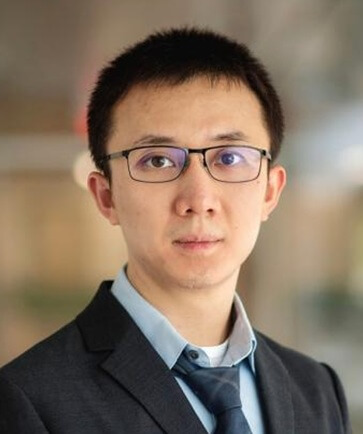
University of Michigan
Qing Qu is an Assistant Professor in the Department of Electrical Engineering and Computer Science (EECS) at the University of Michigan, Ann Arbor, where he leads the DeepThink Lab and is affiliated with the Michigan Institute for Data Science (MIDAS), the Michigan Center for Applied and Interdisciplinary Mathematics (MCAIM), and the Michigan Institute for Computational Discovery and Engineering (MICDE). He received his B.Eng. in Electrical and Computer Engineering from Tsinghua University in 2011, his M.Sc. from Johns Hopkins University in 2012, and his Ph.D. in Electrical Engineering from Columbia University in 2018 under the supervision of Prof. John Wright, followed by a Moore-Sloan Data Science Fellowship at NYU's Center for Data Science from 2018 to 2020. His research lies at the intersection of signal processing, machine learning, and numerical optimization, with a focus on computational methods for learning low-complexity models from high-dimensional data. His current research centers on the foundations of generative AI, deep representation learning, and machine learning for scientific applications. He has made foundational contributions to the geometric analysis and optimization landscape theory of Neural Collapse, revealing how deep representations evolve toward minimal within-class variability and maximally separated class means. In generative modeling, his work uncovered "consistent model reproducibility" in diffusion models—the phenomenon that diffusion models generate nearly identical outputs from the same noise input regardless of architecture or training procedure. His honors include the Best Student Paper Award at SPARS 2015, a Microsoft Ph.D. Fellowship in 2016, an NSF CAREER Award in 2022, an Amazon AWS AI Award in 2023, the U-M Chinese Heritage & Scholarship Junior Faculty Award in 2025, a Google Research Scholar Award in 2025, and the College of Engineering 1938E Award in 2026. He is a founding organizer of the Conference on Parsimony and Learning (CPAL), serves as an Area Chair for NeurIPS, ICML, and ICLR, and is an Action Editor for TMLR.